Chinese
 English
 français
 italiano
 español
 português
 Nederlands
 日本語
日本語 한국의
한국의



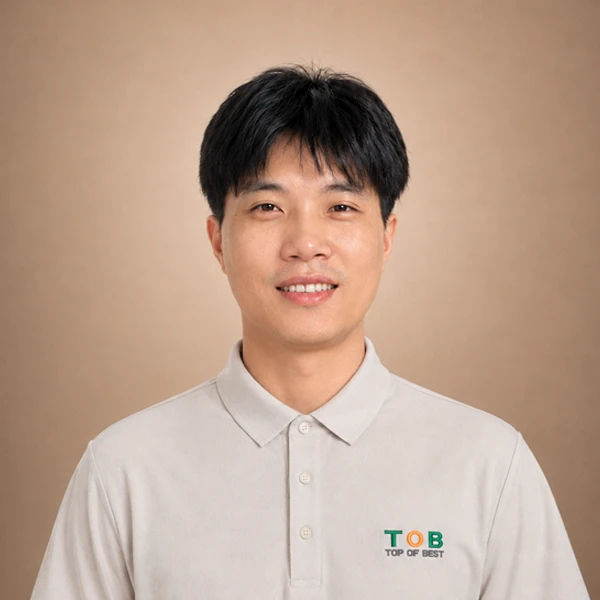
Kevin Li
Warum die Inbetriebnahme vor Ort darüber entscheidet, ob eine Leitung funktioniert
Eine Maschine, die das Werk verlässt, wurde von den Herstellern an einem bekannten Material unter bekannten Umgebungsbedingungen getestet. Beim Kunden vor Ort trifft fast nichts davon zu: Die Rohstoffe sind anders, Luftfeuchtigkeit und Temperatur variieren, Stromversorgung und Druckluftspezifikation entsprechen den lokalen Normen, und die Bediener haben die Maschine noch nie zuvor gesehen.
Hier entscheidet sich, ob Labor- oder Pilotanlagenprojekte erfolgreich sind oder scheitern. Die Anlagen können mechanisch einwandfrei funktionieren, während die erste Elektrode dennoch unbrauchbar ist – etwa weil die Schlammrezeptur nicht an das lokale Bindemittel angepasst wurde oder weil niemand den Zusammenhang zwischen Beschichtungsdicke, Flächenmasse und Beschichtungsgewicht erläutert hat. Um dies zu beheben, ist jemand vor Ort erforderlich, der sowohl die Maschine als auch den zugrunde liegenden Prozess versteht.
Das ist die Aufgabe: die Ausrüstung installieren und in Betrieb nehmen, dann lange genug bleiben, um zu beweisen, dass der Prozess läuft und das eigene Team des Kunden ihn am Laufen halten kann.
Auslandsprojektbericht— sechs Länder seit 2019
Jeder der folgenden Einträge beschreibt ein Projekt, zu dem er entsandt wurde und das er vor Ort abschloss. Der Aufgabenbereich umfasst die Installation und Montage von Schnittstellen, den Anschluss von Elektrik und Rohrleitungen, die Inbetriebnahme der Gesamtmaschine, die Validierung der Prozessparameter, die Überprüfung im Probelauf, die Abnahmeübergabe und die Schulung der Bediener.
- ▸Die Pilotlinie wurde in Betrieb genommen, anschließend wurde eine Vor-Ort-Validierung durchgeführt.Trockenpulverelektrodenverfahrengemeinsam mit dem Kunden, gemäß dem TOB-Prozess
- ▸BestätigtTrockenpulververmahlung, Filmbildung und Laminierung— die drei Phasen, die darüber entscheiden, ob eine Trockenelektrode verwendbar ist
- ▸Das Projekt wurde bis zur fertigen Zellfertigung und Batterieproduktion durchgeführt, die Validierung wurde erfolgreich abgeschlossen.
- ▸Das Laborprojekt wurde vor Ort eingerichtet: Installation der Ausrüstung, Inbetriebnahme und praktische Anleitung des Kundenteams.
- ▸Gleiches 60138-Superkondensatorformat wie im kanadischen Projekt, jedoch im Labormaßstab statt im Pilotmaßstab.
- ▸Technische Kommunikation und Austausch vor Ort für eine32140 Natriumionenzellen-ProduktionslinieProjekt
- ▸Die Natriumionen-Chemie unterscheidet sich von der Lithiumionen-Chemie – unterschiedliche Materialhandhabung und Prozessfenster
- ▸Die Pilotlinie wurde eingerichtet, anschließend wurde eng mit dem Kunden zusammengearbeitet.Schlitzdüsen-Extrusionsbeschichtungsanlageum ihre Beschichtungstechnik und Beschichtungsleistung zu verbessern
- ▸Projekt bis zur fertigen Zellenfertigung abgeschlossen
- ▸Das Laborprojekt mit prismatischer Aluminiumhülle wurde installiert und in Betrieb genommen, inklusive Einweisung vor Ort in die Bedienung der Geräte.
- ▸Diagnostizierte Probleme im bestehenden System des KundenSchlammzubereitungsprozesserklärte, was schief lief, und schlug konkrete Verbesserungen vor.
- ▸Aufbau der Montageanlagen für eine Linie mit prismatischem Aluminiumgehäuse, einschließlich Installation und Inbetriebnahme
- ▸Vor Ort installierte und in Betrieb genommene Polymer- und Zylinderzellenprojekte.
- ▸Ich habe mit dem Kunden zusammengearbeitet, um dieMischungsprozessformulierung und -verhältnis
- ▸Ich habe dem Kunden beigebracht, wie manBerechnung und Anpassung der Beschichtungsdicke anhand der Flächendichte und des Beschichtungsgewichts— die Berechnung, die eine Zielvorgabe in eine Maschineneinstellung umwandelt
Was die Lieferung vor Ort umfasst
-
1 Schnittstellen für mechanische Installation und Montage
Positionierung und Installation der Geräte in den Räumlichkeiten des Kunden, anschließende Verbindung benachbarter Maschinen, sodass die einzelnen Abschnitte eine Linie bilden.
-
2 Elektrische und Rohrleitungsanschlüsse
Strom-, Steuer-, Druckluft- und Flüssigkeitsleitungen – angepasst an die jeweiligen nationalen Standards anstatt von chinesischen Spezifikationen auszugehen.
-
3 Inbetriebnahme der gesamten Maschine
Die Inbetriebnahme jeder einzelnen Maschine und die Bestätigung, dass die Linie als integriertes System und nicht als isolierte Einheiten läuft.
-
4 Validierung der Prozessparameter
Confirming the process actually produces acceptable output on the customer’s materials, adjusting parameters where local materials behave differently.
-
5 Fault diagnosis — hardware, software and process
Rapidly locating and resolving on-site faults, whether the cause sits in the machine, the control software or the process itself.
-
6 Trial run and acceptance handover
Completing trial-run verification, then project acceptance and formal delivery.
-
7 Customer technician training
Training the customer’s own technical staff on equipment operation and routine maintenance, so the line keeps running after handover.
-
8 Multi-party coordination to hit project milestones
Adapting to each country’s site regulations and coordinating resources across parties to keep project nodes on schedule.
Equipment and Process Coverage
Cell formats
Polymer pouch, cylindrical, prismatic aluminium-shell, and supercapacitor (60138).
Chemistries
Lithium-ion, sodium-ion (32140 production line), and supercapacitor systems.
Line scale
Laboratory lines and pilot lines, including complete turnkey sets rather than single machines.
Electrode processes
Dry powder electrode — milling, film forming, lamination; wet coating via slot-die extrusion.
Process areas advised on
Slurry preparation and formulation, mixing ratio, coating thickness against areal density and coat weight.
Handover deliverables
Trial-run verification, acceptance documentation, operator and maintenance training.
Frequently Asked Questions
Does TOB NEW ENERGY send engineers to install equipment overseas?
Yes. Kevin Li has been despatched to customer sites inCanada, Spain, Germany, South Korea, Brazil and Kazakhstansince 2019, along with further overseas commissioning assignments. On-site scope covers mechanical installation and assembly interfacing, electrical and pipework connection, whole-machine commissioning, process parameter validation, trial-run verification, acceptance handover, and training of the customer’s technical staff on operation and routine maintenance. Site practices are adapted to each country’s regulations rather than assuming Chinese specifications.
What happens if the equipment runs but the electrode quality is still wrong?
That is treated as part of commissioning, not as a separate service. On the Brazilian prismatic aluminium-shell project the equipment was installed and running, but the customer’sslurry preparation processhad problems of its own — these were diagnosed on site, explained, and specific improvements proposed. On a polymer and cylindrical cell project the work included improving themixing formulation and ratio, and teaching the customer how to calculate and adjustcoating thickness from areal density and coat weight. Fault diagnosis covers hardware, control software and process causes.
Has TOB commissioned dry electrode equipment on a customer site?
Yes. On the Canadian60138 supercapacitor pilot line, Kevin Li ran on-site validation of the dry powder electrode route together with the customer, following the TOB process. The validation covereddry powder milling, film forming and lamination, and the project continued through to finished cell fabrication and battery production with validation completed successfully. Dry electrode processing is also a core TOB patent area — the company holds a four-patent chain covering the complete dry electrode route.
Which cell formats and chemistries has he commissioned?
Four formats — polymer pouch, cylindrical, prismatic aluminium-shell, and supercapacitor (60138) — across lithium-ion, sodium-ion and supercapacitor systems. The sodium-ion work was a32140 production lineproject in Germany. Both laboratory lines and pilot lines are covered, supplied as complete turnkey sets rather than single machines.
Will our own technicians be trained to run the line?
Yes — operator training is a standard part of project delivery, not an add-on. After commissioning and trial-run verification, the customer’s technical staff are trained on equipment operation and routine maintenance. On the South Korean pilot line this went further: the work included hands-on collaboration at theslot-die extrusion coaterto raise the customer’s own coating technique and coating performance, with the project completed through to finished cell fabrication.
Can he support a project where the equipment was not supplied by TOB?
Process support and diagnosis are transferable, because most on-site failures trace back to materials, formulation or parameter setting rather than to the machine brand. The Brazilian slurry diagnosis and the mixing and coating optimisation on the polymer and cylindrical cell project are both examples of process problems solved on the customer’s existing setup. Mechanical and electrical work on third-party equipment depends on the specific machine and should be discussed case by case.
Who does he work with inside the TOB engineering team?
Die Inbetriebnahme vor Ort ist der letzte Schritt einer Kette, die viel früher beginnt. Prozessabläufe und Parameterbereiche werden von Technischem Direktor Neil Zhao und den leitenden Ingenieuren festgelegt; Exportkonformität, Logistik und schlüsselfertige Projekte liegen in der Verantwortung von Amy Wang; Anlagenspezifikation und Fabriklayout werden von Gründer Dany Huang übernommen. Kevin Li ist derjenige, der dafür sorgt, dass all dies in der Praxis beim Kunden funktioniert – und wo Probleme an die Prozessentwickler zurückgemeldet werden.
Ob Laborlinie, Pilotlinie oder eine komplette schlüsselfertige Anlage – nennen Sie uns das Zellenformat, das Land des Standorts und Ihren Zielzeitplan, und wir werden gemeinsam mit Ihnen die Inbetriebnahme und Schulung vor Ort planen.
Besprechen Sie Ihr Projekt Abonnieren Sie uns