Chinese
 English
 français
 italiano
 español
 português
 Nederlands
 日本語
日本語 한국의
한국의




Kategorien
Heiße Produkte
Patent CN215506637U – Vibrationssieb-Zuführvorrichtung
Sep 29,2026Siebt verbackene Klumpen aus dem Pulver, bevor es den Mischer erreicht, und fördert es dann hinein – so kann ein Großmischer sicher beschickt werden, während er weiterläuft.
Vollständige Spezifikation und Zeichnungen: CN215506637U auf Google Patents
Batterieschlamm beginnt als fester oder pulverförmiger Rohstoff – und stehen gelassenes Pulver verbackt. Klumpen, die den Mischer erreichen, verschlechtern die Mischqualität, und die härtesten Klumpen können den Mischer selbst beschädigen. Doch die beiden damals verwendeten Beschickungsmethoden hatten ihre eigenen Probleme: Die manuelle Beschickung bot dem Bediener wenig Schutz und war ineffizient, und die Vakuumbeschickung war teuer und erforderte komplexe Vibrationsausrüstung. Keine der beiden Methoden konnte Material hinzufügen, während der Mischer lief.
CN215506637U, angemeldet am 9. September 2021, löst beide Seiten des Problems. Es siebt das Rohmaterial, bevor es jemals in den Mischer gelangt, und treibt das Sieb mechanisch von demselben Motor an, der die Schneckenförderung dreht – kein separater Vibrator, kein zusätzlicher Aktor.
Patentinformationen
| Veröffentlichungsnummer | CN215506637U |
| Anmeldenummer | CN202122171553.1U |
| Titel (Original) | 一种基于大型搅拌机用上料装置 (Vibrationssieb-Beschickungsvorrichtung für Großmischer) |
| Erfinder | Huang Zhengyao (Dany Huang); Chen Lucai (Tobey Chen) |
| Aktueller Rechtsinhaber | XIAMEN TOB NEW ENERGY TECHNOLOGY Co., Ltd. – die registrierte Einheit von TOB NEW ENERGY |
| Anmeldedatum | 9. September 2021 |
| Erteilungsdatum | 14. Januar 2022 |
| Dokumententyp | Gebrauchsmuster (erteilt, Art-Code U) |
| Rechtsstatus | Aktiv |
| Voraussichtliches Ablaufdatum | 9. September 2031 |
| Zitierte Patente (Forward citations) | Zitiert von 1 nachfolgenden Patent |
| Zeichnungen | 5 Abbildungen |
| Offizielles Register | CN215506637U auf Google Patents |
Das Produktionsproblem, das dieses Patent löst
Pulverförmige Rohstoffe für Lithiumbatterie-Slurry neigen bei der Lagerung zur Agglomeration. Die Spezifikation listet die Folgen in der Reihenfolge ihrer Schwere auf: Verklumpungen verringern die Rührqualität, und verhärtete Klumpen können sogar den Mischer selbst beschädigen. Bei der Zuführung bringt die manuelle Beladung den Bediener neben eine laufende Maschine, ohne dass echte Schutzmaßnahmen bestehen, und kann mit der Produktion nicht Schritt halten; die Vakuumzuführung erfordert teure Ausrüstung und komplexe Vibrationshardware. Das Ergebnis, das das Patent anstrebt, ist in seiner Zusammenfassung dargelegt: Rohmaterial, das vor dem Mischer gesiebt wird, ein Bediener, der sich vom Mischer fernhalten kann, und eine Vorrichtung, die Material hinzufügen kann, während der Mischer weiter mischt.
Funktionsweise des Mechanismus
Einlass und Siebung
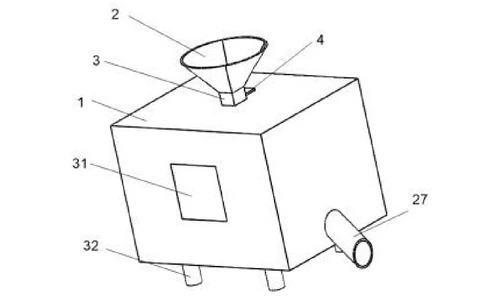
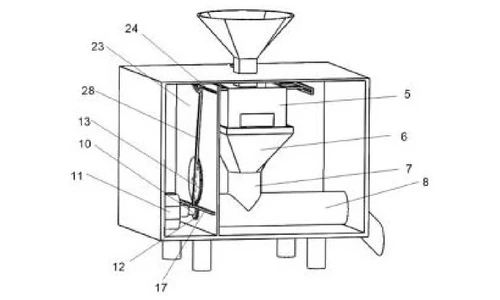
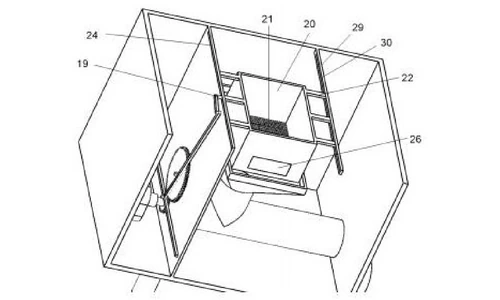
Die Vorrichtung ist ein Gehäuse (1), das auf Stützsäulen (32) steht. Material wird in den Einfülltrichter (2) an der Oberseite geschüttet, passiert eine durch ein Leitblech (4) verschlossene Zuführöffnung (3) und landet auf dem Vibrationssieb (20). Das Siebgewebe (21) wird in eine Gewindenut (25) am Boden des Siebrahmens eingesetzt, sodass das Gewebe ausgetauscht werden kann, um die Trenngröße zu ändern. Eine Siebtür (26) öffnet sich, damit die auf dem Gewebe verbleibenden Rückstände – die Klumpen – entnommen werden können.
Ein Motor, zwei Aufgaben: Fördern und Schütteln
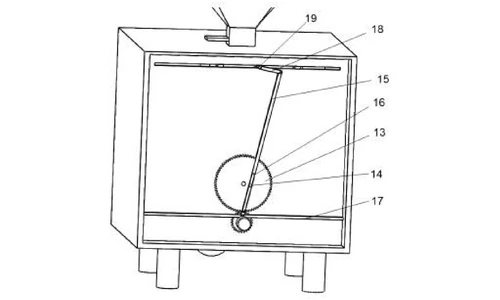
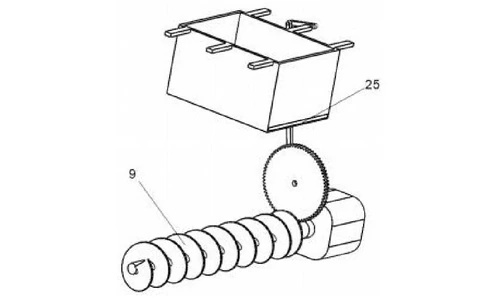
Der Motor (11) dreht eine rotierende Welle (10) über eine Kupplung. Die Welle treibt eine Schneckenwelle (9) innerhalb des horizontalen Rohrs (8) – die Förderaufgabe – und trägt ein Ritzel (12) das in ein großes Zahnrad (13) eingreift,großes Zahnrad (13) darüber – die Rüttelaufgabe. Ein zylindrischer Stift (14), der am großen Zahnrad befestigt ist, läuft in einer rechteckigen Nut (16) eines ersten Verbindungsglieds (15), dessen unteres Ende als Drehgelenk an einer Querstange (17) gelagert ist. Wenn sich das Zahnrad dreht, schwenkt der Stift das Verbindungsglied, und ein zweites Verbindungsglied (18) überträgt diese Bewegung auf einen Schieber (19). Die Drehbewegung des Zahnrads wird somit in die hin- und hergehende Bewegung des Schiebers umgewandelt, und der Schieber rüttelt das Sieb.
Stabiler Sieblauf
Das Sieb ruht auf sechs Siebgriffen (22). Der Schieber wirkt auf den mittleren rechten Griff, während das linke Ende jedes Griffs in einer Quernut (30) an einer Querstange (29) läuft; der Schieber selbst läuft in der Schiebernute (24) einer Trennplatte (23). Die Spezifikation schreibt dieser Anordnung zu, die Siebvibration stabil zu halten, und sie schützt zudem den Bediener: Alle beweglichen Teile befinden sich innerhalb des Gehäuses, das über eine Seitentür (31) zur Inspektion und Rückstandsentfernung verfügt.
Förderung in den Mischer
Gesiebtes Pulver fällt durch einen quadratischen Trichter (6) und ein vertikales Rohr (7) in das horizontale Rohr (8). Dort schiebt es die rotierende Schneckenwelle (9) entlang zum Auslassstutzen (27), der in den darunter liegenden Mischer führt. Da das Material mechanisch gefördert wird und das Sieb keinen separaten Vibrator benötigt, kann die Vorrichtung den Mischer während des laufenden Mischvorgangs beschicken.
Beanspruchte Vorteile
| Vorteil | Verantwortlicher Mechanismus |
|---|---|
| Agglomerate werden entfernt, bevor sie den Mischer erreichen | Vibrationssieb über dem Förderweg |
| Einfache, kostengünstige Vibration | Zahnrad- und Zwei-Glied-Mechanismus, angetrieben durch den Fördermotor selbst |
| Beschickung während der Mischer läuft | Mechanische Förderung durch vertikale und horizontale Rohre zum Auslassstutzen |
| Bediener bleibt vom laufenden Mischer fern | Geschlossenes Gehäuse mit einlassseitigem Trichter für den Bediener und kontrolliertem Auslass |
| Einfache Wartung und Rückstandsentfernung | Austauschbares Siebgewebe, Siebtür und seitliche Gehäusetür |
| Stabile Siebbewegung | Sechs Siebgriffe, wobei der Schieber auf den rechten mittleren Griff einwirkt |
Vergleich mit der manuellen Befüllung des Mischers
Pulverförmige Rohstoffe agglomerieren bei der Lagerung: Verkrustete Klumpen beeinträchtigen die Rührqualität und gehärtete Klumpen können sogar den Mischer beschädigen. Bei der manuellen Befüllung steht der Bediener zudem direkt neben einer laufenden Maschine. Diese Vorrichtung siebt und fördert stattdessen.
| Dimension | Herkömmlicher Ansatz | Dieses Patentdesign |
|---|---|---|
| Klumpenkontrolle | Verkrustetes Pulver gelangt zum Rührwerk | Vibrationssieb entfernt Agglomerate oberhalb der Förderstrecke |
| Arbeitssicherheit | Manuelle Befüllung neben einem laufenden Mischer | Geschlossenes Gehäuse mit bedienerseitigem Einfülltrichter und gesteuertem Austrag |
| Antrieb | Separate Schüttelvorrichtung muss gekauft und gewartet werden | Fördermotor treibt das Sieb zusätzlich über einen Zahnrad-Zweilenker-Mechanismus an |
Wo diese Technologie heute eingesetzt wird
Dieses Patent deckt die Stufe der Vormischer-Zufuhr der Slurry-Aufbereitungslinie von TOB ab. Erst Sieben, dann Fördern – ohne separaten Vibrator, der gekauft oder gewartet werden muss – so schützt unsere Zuführanlage große Mischer vor verkrustetem Rohmaterial.
Anfragen zu verwandten Geräten: Angebot anfordern
Häufig gestellte Fragen
Was deckt das Patent CN215506637U ab?
Es deckt eine Zuführvorrichtung für großtechnische Mischer ab: ein Gehäuse mit einem oberen Einfülltrichter, ein mechanisch geschütteltes Vibrationssieb, das Agglomerate entfernt, und einen Schneckenförderer, der das gesiebte Pulver aus einer Austragsöffnung in den Mischer fördert. Das Sieb wird durch einen Zahnrad-Gestänge-Mechanismus geschüttelt, der von demselben Motor angetrieben wird, der auch die Schneckenwelle dreht.
Warum muss das Rohmaterial überhaupt vor dem Mischen gesiebt werden?
Feste und pulverförmige Rohstoffe verkrusten während der Lagerung. Klumpen beeinträchtigen die Rührqualität, und ausgehärtete Klumpen können den Mischer selbst beschädigen. Das Aussieben vor dem Eintritt des Materials in den Mischer ist die in der Spezifikation geforderte Vorbehandlung.
Wie wird das Sieb ohne einen separaten Vibrator in Schwingung versetzt?
Der Fördermotor treibt eine Welle an, die sowohl die Schneckenwelle als auch ein Ritzel trägt. Das Ritzel dreht ein großes Zahnrad, und ein zylindrischer Stift am Zahnrad bewegt einen Zweilenker-Mechanismus, der einen Schieber hin- und hergehen lässt – so wird die Drehung des Zahnrads mit sehr wenigen Teilen in die Hin- und Herbewegung des Siebs umgewandelt.
Kann die Vorrichtung den Mischer während des laufenden Mischvorgangs befüllen?
Ja. Das Material wird in einem geschlossenen Gehäuse gesiebt und mechanisch durch Rohre zur Austragsöffnung gefördert, sodass der Bediener nicht neben dem laufenden Mischer stehen muss und der Mischer für die Befüllung nicht gestoppt werden muss.
Wie werden Klumpen und Rückstände vom Sieb entfernt?
Das Vibrationssieb verfügt über eine Siebtür zur Entnahme der nach dem Sieben verbliebenen Rückstände, und das Siebgewebe selbst ist in eine Nut am Boden des Siebrahmens eingesetzt, sodass es ausgetauscht werden kann. Eine Seitentür am Gehäuse ermöglicht den Zugang zu den inneren Teilen.
Ist das Patent CN215506637U noch in Kraft?
Ja. Es ist aktiv, wurde am 9. September 2021 angemeldet und am 14. Januar 2022 erteilt, mit einem voraussichtlichen Ablaufdatum am 9. September 2031, und wurde von 1 nachfolgenden Patent zitiert.
Vollständige Spezifikation und Zeichnungen: CN215506637U auf Google Patents
 Abonnieren Sie uns